Offcanvas
Offcanvas is an edge-docked panel that slides in over the current page. It is the
library mapping of Bootstrap 5 offcanvas, and it is meant for navigation drawers,
filter sidebars, and inspector panes that should leave the underlying view visible.
Choose Offcanvas when the extra UI is optional context the user can dismiss. Prefer a modal dialog when work on the page must pause until the overlay is finished.
Basic usage
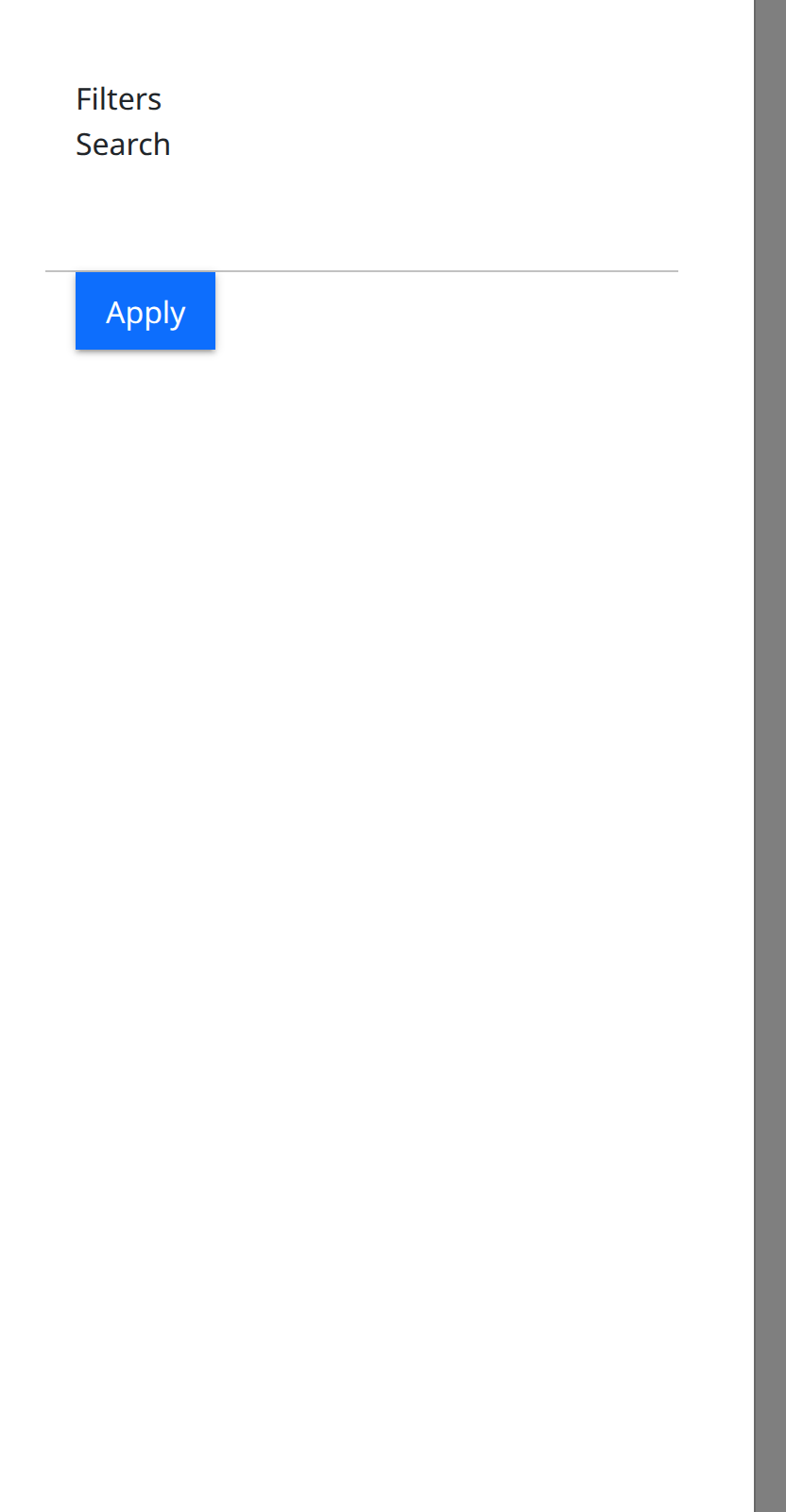
def demo():
    with (
        bs.scope(),
        bs.offcanvas(is_open=True, placement="start", backdrop=True).style("padding:24px"),
    ):
        ui.label("Filters")
        ui.label("Search")
        ui.input()
        ui.button("Apply")
The panel is a container: put labels, forms, and actions inside the context manager.
Construct it closed (is_open=False) if a toolbar button should reveal it later.
Options
Placement
placement selects the viewport edge that owns the panel. Bootstrap values are
start, end, top, and bottom. Horizontal placements suit menus and filters;
top and bottom suit short action strips.
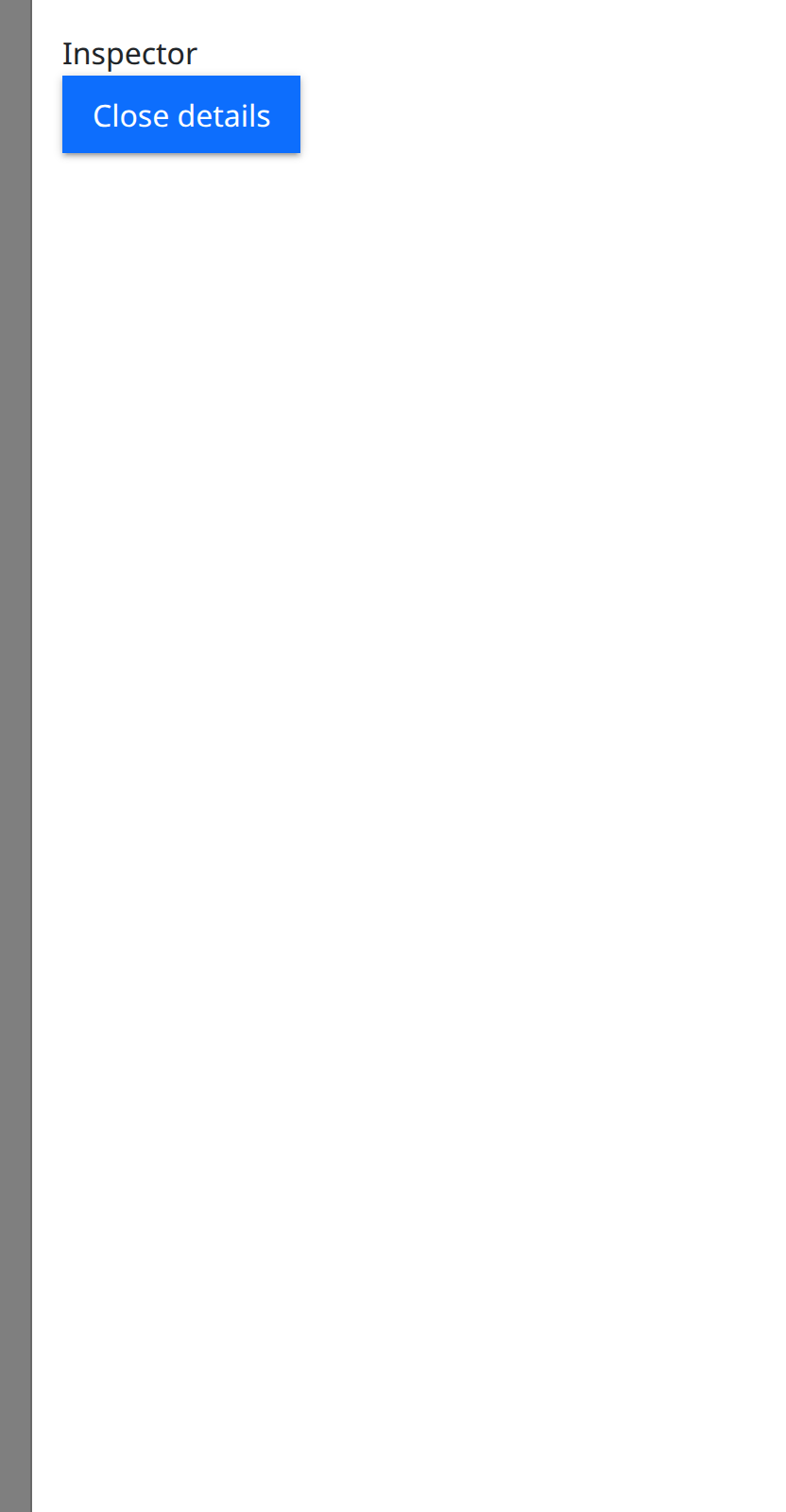
def demo():
    with bs.scope(), bs.offcanvas(placement="end", is_open=True, backdrop=True):
        ui.label("Inspector")
        ui.button("Close details")
start and end follow the document writing direction, so a start drawer stays on
the inline-start edge in both LTR and RTL layouts.
Backdrop
backdrop controls the dimmed layer behind the panel. Leave it on when the drawer
should feel modal: the rest of the page is inactive while the panel is open. Pass a
false value when the user should keep editing the main view, for example a persistent
filter column on a wide breakpoint.
A static-style backdrop (when the implementation allows it) keeps the dimmer visible without closing the panel on an outside click. Use that when accidental dismiss would lose in-progress input.
Open state
is_open is the Python flag for visibility. It is the source of truth for whether
the panel is on screen. Drive it from buttons, nav links, or application state rather
than fighting the component with extra CSS.
from nicegui import ui
from nicegui_bootstrap_components import bs

with bs.scope():
    drawer = bs.offcanvas(
        ui.label("Session"),
        is_open=False,
        placement="start",
        backdrop=True,
    )
    ui.button("Menu")
Keep the instance when surrounding controls need to change is_open after the
page has been built.
Argument reference
| Property | Type | Default | DBC 2.0.4 name | Support (native) | Support (compat) |
|---|---|---|---|---|---|
| children | a list of or a singular dash component, string or number | None | children | supported | supported |
| id | string | None | id | supported | supported |
| is_open | boolean | False | isOpen | supported | supported |
| title | a list of or a singular dash component, string or number | None | title | supported | supported |
| placement | a value equal to: 'start', 'end', 'top', 'bottom' | None | placement | supported | supported |
| backdrop | boolean | a value equal to: 'static' | True | backdrop | supported | supported |
| close_button | boolean | True | close_button | supported | supported |
| keyboard | boolean | None | keyboard | supported | supported |
| scrollable | boolean | None | scrollable | supported | supported |
| style | unknown | None | style | supported | supported |
| class_name | string | None | className | supported | supported |
| backdrop_class_name | string | None | backdrop_class_name | supported | supported |
| autofocus | boolean | None | autofocus | supported | supported |
| labelledby | string | None | labelledby | supported | supported |
| class_name | string | None | className | supported | supported |
| backdropClassName | string | None | backdropClassName | supported | supported |
| autoFocus | boolean | None | autoFocus | supported | supported |
| labelledBy | string | None | labelledBy | supported | supported |